Got Hot Trends - Page 10 of 15 - It's Trending

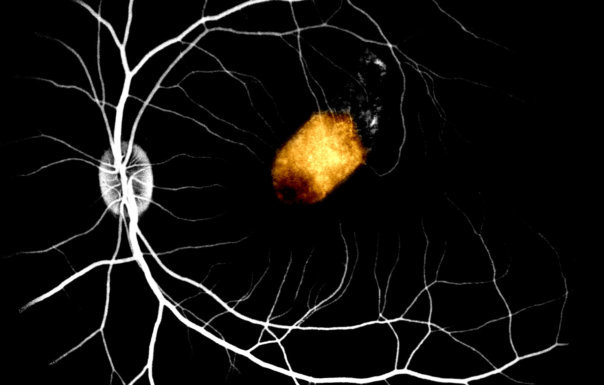
Eye Stem Cells Transplanted From Corpses Could Cure Blindness

Researchers say retina cells from a corpse continue to survive after being transplanted into the eyes of monkeys.

By Study Finds     Image Credit: Icahn School of Medicine at Mount Sinai

For anyone that has undergone a life-saving transplant, they know how important organ donation can be.

Now, a new study finds stem cells taken from deceased patients may also help in creating a cure for blindness.

Researchers say retina cells from a corpse continue to survive after being transplanted into the eyes of monkeys.

Retinal pigment epithelium (RPE), a layer of cells in the eyes, transports nutrients and waste products to and from the retina.

These cells also act as a barrier and help regulate light receptors, all of which are “essential” for normal vision.

Now, for the first time, scientists have successfully produced retina cells in monkeys using human stem cells.


If You'd Like To Know More...

N95 Vs. KN95 Masks: What’s the Difference?

Here's what the science says—and which one is right for you.

By  COURTNEY LINDER at at Popular Mechanics   Image: RYANJLANE/GETTY IMAGES

You've probably been wearing a mask when out in public for most of the past year, but are you still wearing the right one?


With new variants of COVID-19 emerging in the U.S., medical professionals are urging the public to go beyond cloth masks, surgical masks, and double masks. 


Instead, they say, you should opt for a higher-filtration mask like an N95 or KN95.


These masks can filter a higher percent of particles in the air than surgical masks or homemade cloth face coverings.


N95 and KN95 masks are held to different standards, though, so you need to be careful in deciding which is right for you.


For the average person, N95 masks and KN95 masks have negligible differences. If you're not a health care worker, either should suffice for you.


But if you can't find either kind of mask, consider double masking with a surgical mask beneath your cloth mask.


If You'd Like To Know More...With More Details

Will Private Spaceflight Actually Become A Thing?

NASA aims to travel to the moon again—and beyond. Here’s a look at the 21st-century race to send humans into space.

By NADIA DRAKE and Victoria Jaggard at National Geographic  Artist: OWEN FREEMAN for National Geographic

Private spaceflight is not a new concept. In the United States, commercial companies played a role in the aerospace industry right from the start.


Since the 1960s, NASA has relied on private contractors to build spacecraft for every major human spaceflight program, starting with Project Mercury and continuing until the present.


SpaceX, which established a new paradigm by developing reusable rockets, has been running regular cargo resupply missions to the International Space Station since 2012.


And in May 2020, the company’s Crew Dragon spacecraft carried NASA astronauts Doug Hurley and Bob Behnken to the ISS, becoming the first crewed mission to launch from the United States in nearly a decade.


Other companies, such as Blue Origin and Virgin Galactic, are specializing in sub-orbital space tourism.


If You'd Like To Know More...

1 8 9 10 11 12 15